Tag: hotel

animal-cloning-biotechnology

What are the Technical Difficulties of Animal Cloning?

Many pet owners or related practitioners may have questions like this:

“Since you can clone dogs and cats, it should be easy to clone other animals, right?”

“Why not clone more kinds of animals, such as birds, rabbits, and pigs?”

“Isn’t your animal cloning biotechnology very mature? But why do you deliver in 6 to 10 months? Can it be faster? ” and so on.

In fact, although cloning biotechnology has been conquered and mastered by many biologists, each species has its own characteristics of reproductive physiology. One of the main difficulties in animal cloning process is how to obtain mature oocytes and reconstruct embryos. Oocyte is one of the essential elements in cloning practice. Take dog cloning as an example. Dogs have special reproductive physiological structure, so hormone regulation has no effect. It is difficult to accurately determine the maturation time of oocytes and obtain oocytes.


At the same time, dogs have higher fat content in oocyte, which is sensitive to the external environment and requires a high level of in vitro operation technology. It is difficult to clone pet dog because of the difficulty of multiple technical processes. As for the cloned cat, there are also technical difficulties in how to construct a complete reconstructed embryo. Meanwhile, the apoptosis rate of the cat is relatively faster. When the body cells are sampled from the skin, the requirements for the tissue are higher. Skin tissues that have died more than 3 days have a lower success rate in establishing cell lines. In addition, Cats are animals that stimulate ovulation. Obtaining oocytes has its own difficulties.
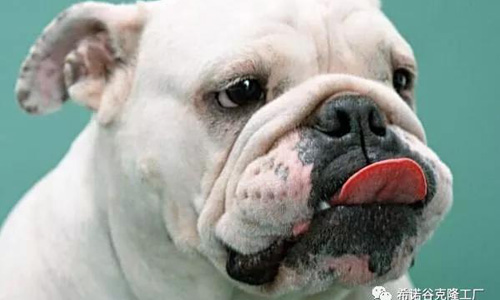
 

Therefore, each kind of animal has its own technical difficulties. There is no same technical operation template to apply. If we want to develop a new animal cloning plate, we need to reinvest technical force to conquer it, which must take a long time. It also explains why it takes a certain period to deliver whether it’s a cloned cat or a cloned dog. Oocytes are not acquired by acquisition. It depends on the law of reproduction and development of animals, which requires careful reserve and observation.
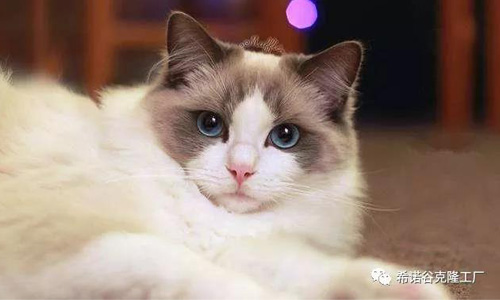
In addition, the cloned animals of Sinogene will not be delivered to pet owners until they grow up safely in the laboratory for two months. And the first vaccination will be made to ensure that the delivered cloned babies are healthy and immune. Therefore, choosing pet cloning service from Sinogene is also a choice of rest assured and intimate, so that your pets can accompany you forever.

Special_Tissue_Preservation_Pet_Cloning-3

Special Tissue Preservation | Another Possibility for Pet Cloning

If one day your pet has to leave this world, what do you most want to leave as a memorial? In addition to the photos and videos of his life, toys and supplies that have not been used for a long time, what else can save a little hope besides seeing things and then thinking? Stop worrying about these, Sinogene thinks about what you think, and has been behind you and your pets, striving to help you get together again. Sinogene has launched two services for you:

1. Skin Tissue Preservation Service

The skin tissue preservation service is different from our previous cell preservation service.

The cell preservation service is to establish a system to cultivate active cells immediately after obtaining pet skin samples.

For skin tissue preservation, after we receive skin samples, we will not establish cell line, but will immediately use special protective media and liquid nitrogen environment to preserve skin tissue. When the samples need to be activated in the future, establish a cell line to cultivate active cells and start cloning.

How to preserve skin tissue:

1. Use special protective media and liquid nitrogen environment to preserve skin tissue:

2. Enable saving samples in the future, there will be a high probability of cultivating live cells and initiate the cloning process;

3. It is recommended to keep the tissues within 5 days of the pet’s death. Before sampling, preserve at 4°C as much as possible

4. After receiving the samples, Sinogene will immediately conduct a professional cryopreservation procedure.

2. Special Tissue Preservation Service

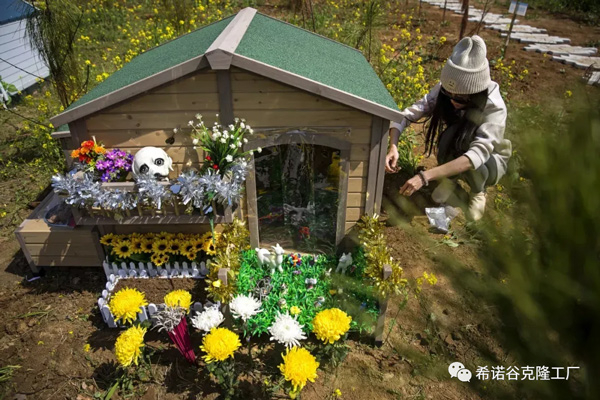
Among the pet owners who are in daily contact with Sinogene, a certain proportion of the owners who consulted whether a dog or cat can be cloned after the decease of the pet. Among them, some dogs or cats have just passed away, others have passed away for several years. When asking for cell preservation or cloning services, some pet owners come with the remains of their pets, and some with their bone ashes, hair, toys, and daily necessities.

In order to meet the needs of different pet owners, Sinogene has launched a special tissue preservation service, which enables the preservation of pet teeth, nails, hair and other special samples.

We will keep the DNA genetic information as complete as possible through professional preservation procedures and means.

Although these samples carrying genetic genes are not yet available for cloning, biotechnology is changing with each passing day. Perhaps in the near future, these DNA seeds will become the hope of future cloning!

How to save the special tissue:

1. Preserve special samples such as pet teeth, nails, and hair.

2. Professional preservation procedures and means to keep basic and complete DNA genetic information as much as possible;

3. Private non-professional preservation of samples will lead to incomplete DNA and out of activity in the future.

4. Maybe these DNAs are not sufficient for the cloning yet, but what about the future? We will keep this seed of hope for you.

cloned_race_horses

Cloned Horses Company – Sinogene Helps Horse Breeding

Sinogene is committed to the use of cutting-edge biological science and technology to achieve efficient breeding and clear scientific breeding direction. Our goal is to cultivate characteristic breed so that such breed can also be widely recognized in the world.

In order to protect the original horse breed resources, and at the same time to evaluate, select and preserve the existing breeds, Sinogene biotechnology is establishing a horse genetic preservation bank to preserve the tissues, frozen semen, frozen embryos, cells and genes of high-quality horse breeds by using modern science and technology. Meanwhile, genetic database, sample database and germplasm resource database were established by using gene sequencing technology.

Sinogene biotechnology will sequence and analyze different kinds of horses, analyze the breeds and genetic diversity of horses, and classify and identify the horses by using the combination of gene chip detection technology and genetic breeding and the entire genome sequencing technology, RAD-seq technology or re sequencing and other related technologies. At the same time, the important candidate genes related to diseases and traits are selected. Based on these important candidate genes, the gene detection technology is established to detect the genetic diseases and traits of horses and it assists breeding. Understanding the genetic characteristics and screening can make breeding more directional and improve the efficiency of breeding optimization.

At the same time, as the most cutting-edge ultimate breeding technology, cloning biotechnology can realise the replication of high-quality individual horses and the rapid expansion of the number of excellent groups in batches, which is the cutting-edge technology of scientific breeding. Modern biotechnology can not only achieve the selection and clone, but also carry out breeding at the molecular level through gene editing technology.

In essence, there is no difference between traditional breeding and gene editing breeding. They are all changing at the level of genetic material DNA to cultivate new excellent breeds. However, editing breeding has shorter periodicity, less workload, and less dependence on resources. It can accurately predict the phenotype of offspring, with high selection efficiency and creativity. It can integrate the excellent quality among breeds.

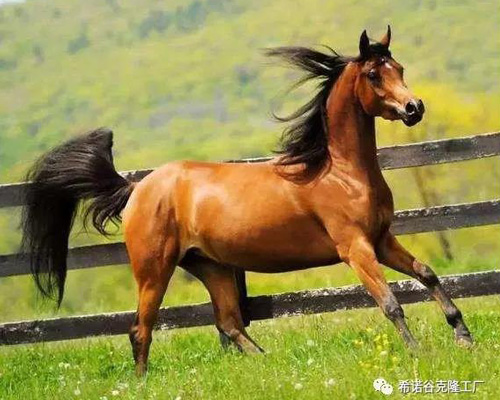
It is known that horses are large animals and typical monogamous animals. Mares breed once a year. Horses can’t breed until they are 4-5 years old, and the performance characteristics of horses can be judged stably only when they are about 8 years old. If traditional breeding methods are used, the randomness of character inheritance leads to the result that it takes more than one generation to cultivate a high-quality population and luck is also needed. Modern animal cloning technology has the characteristics of orientation and high efficiency in breeding. It helps us to get results that used to take the several generations faster and it meets the needs of the development of modern countries. For example, race horse cloning can help you breed horses with excellent characteristics.

If you wish to know about the cloned  race horses or horse cloning cost, please contact us, and we will provide you with high-quality services and technologies.

clone-dead-dog

Can Cats and Dogs be Cloned after Death?

For all the people who have pets, they may have the following questions: 

“how long can my baby stay with me? What if it’s gone one day? ” 

Also, we are often asked by clients:

“Can my cat /dog be cloned after death?”

“Can their hair, bones and blood be cloned?”

Although we have explained it many times, we believe that there are still many pet owners who are not sure about the perfect time of sampling for animal pet cloning and whether their pets have the chance to be cloned successfully. This article will help you to sort out these problems, and I believe that you’ll have a better understanding and grasp the key moment of pet cloning.

1. Can cats /dogs be cloned after their death?

The answer is yes. It is possible to clone pet cat or dog if living cells can be collected and cultured after death.

If the animal has died, if possible, wrap the body in a damp bath towel and put it in the fridge, not the freezer. In general, it is possible to collect living somatic cell within one week after the death of the dog and three days after the death of the cat. Be careful not to freeze them. In general, it is impossible to collect living pet cell after the body is frozen. Most of the tissue cells are composed of liquid. Ice crystals will be formed after freezing, and the genetic material will be destroyed. Therefore, the genetic material in the frozen cells will be ineffective and can no longer be used for animal cell cloning.

2. Can hair, bone, and blood be used for pet cloning?

No. Only complete and active somatic cells can be used for pet cloning.

Hair, scurf, bone, nail, saliva, bloodstain and other materials are all possible to extract DNA from an organism. It is used for DNA testing or paternity test because the inactive cells can still retain complete DNA and can be obtained by scientific means. However, this does not mean that living cells can be extracted from those samples. The premise of gene cloning is to obtain complete and active somatic cells. Cells that have died due to metabolism can no longer grow, divide, and produce new cells.

Now we know when dead dogs and cats can be cloned and when they cannot. In order to avoid regret, in fact, the best way is to do cell preservation as early as possible. Save the cells of dogs and cats in advance when they are healthy, so as to have a chance to start again when something unexpected happens one day. 

genetically_cloned_animals

Cloned Animals are not Short-lived

Researches found that many netizens have the stereotype that “animals being cloned generally have a shorter life span”. 

Is the life span of cloned animals shorter than normal?

A short answer is, the life span of cloned animals is normal. 

Let us explain to you why the life span of genetically cloned animals is normal.

A common misunderstanding about the technology is: Animal cloning technology is the perfect replication of genes. It can also perfectly replicate telomeres that have shortened a certain length. For example, to clone a 10-year-old kitten, the telomere length of its somatic cell has been shortened by 10 years. To clone a kitten with this somatic cell, the telomere length has also been shortened by 10 years, which is equivalent to the age of 10 at birth, so the life span is only a few years, and it is bound to be premature.

But is this “reasonable” statement true?

As for the description of “telomere”, there is no mistake. In fact, its mistake lies in the incomplete understanding of “cloning technology”, which is a simple process of “copy-paste”. It ignores the complex physiological processes involved in cloning technology.

Here, we would like to introduce a professional term “reprogramming”.

Reprogramming refers to the process in which differentiated cells revert to totipotency without changing gene sequence. This process exists in the development of fertilized eggs to embryos, and in the development of cloned reconstructed embryos.

Most importantly, reprogramming restores the telomeres of embryonic cells to their original level!

Imagine a couple that has a child when they are 27 years old, their sperm and oocyte are both “27 years old”. Why is the child born “0 years old”? It is because of the reprogramming process when the fertilized egg develops to the embryo that the telomeres are restored to the original level and back to the “0-year-old”!

During a pet cloning process, the somatic cells of the cloned body are injected into the enucleated oocytes. In the process of forming the reconstructed embryo, the cells are also reprogrammed. In this way, the telomeres of the cells are restored to the original level. Newly cloned animals are also at the “0-year-old” state!

Therefore, from the perspective of scientific theory, we have proven that the life span of cloned animals is normal.

Misunderstanding 2

At this time, it must be asked again: Dolly, the first animal that was cloned, only lived less than 7 years old, suffered from serious arthritis, pneumonia and other diseases, and had to be euthanized. Isn’t it proof that genetically cloned animals have premature aging and abnormal life span?

However, when Dolly was 2 years old, the Japanese cloned twins “Noto” and “Gaho” were born. In May 2018, the 19-year-old “Noto” died, and “Gaho” has survived to this day. The natural life span of the cattle was about 20 years, so the life span of the cloned twins was normal.

Kumlina, a cloned mouse born in 2000, survived for two years and seven months, with a normal life span of about two years.

In June 2000, Yang Yang, a cloned sheep developed by Professor Zhang Yong of Northwest Agricultural and Forestry University of science and technology, was born and died in 2016 at the age of 16, even longer than most of the sheep.

Therefore, it is proven that the life span of genetically cloned animals is normal from the perspective of scientific theory and practical examples.

Up to today, cloning technology has developed for more than 20 years. Sinogene, asan industry-leading pet cloning company, has sufficient experience in cloning experiments and skilled operators. Sinogene Biotechnology ensures that the cloned animals from Sinogene are healthy and will have a normal life span.

pet_cloning_helps_us_meet_again

I’ll be Back as I was

In the history of human development, there are many traces of the participation of animals. They have played important roles in human history.

In modern times, science and technology have replaced many functions once realized by animals, making the original role of animals in human life less important. However, another role is becoming more and more important, that is, the company to human beings.

So we are called “the companion animals”.

We always have different “selfishness” when we let animals into our lives, for their cuteness, or they make us look cool.

It’s not easy to take care of animals, but people always enjoy it. Because when we get along with animals, we can always be touched by their loveliness. We use the words “so cute”, “so wonderful” to describe them.

However, there is reunion and separation, and the life span of animals is only 10-20 years. When they leave, many people will be heartbroken. With the development of animal cloning technology, your pet can accompany you for a longer time.

In recent years, psychological development has defined a psychological disease – “pet loss”. According to statistics, 60% of pet owners will have such a stage after their companion animals die. Their greatest hope is to have them back.

Pets are just as reluctant to be separated from us:

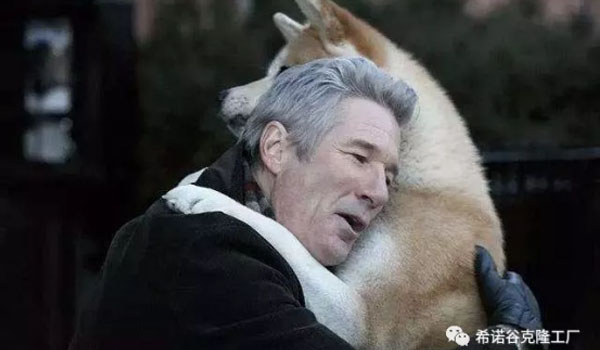
You may have been moved by the story of “Hachi: A Dog’s Tale”. There’s a lot more to it besides dogs.

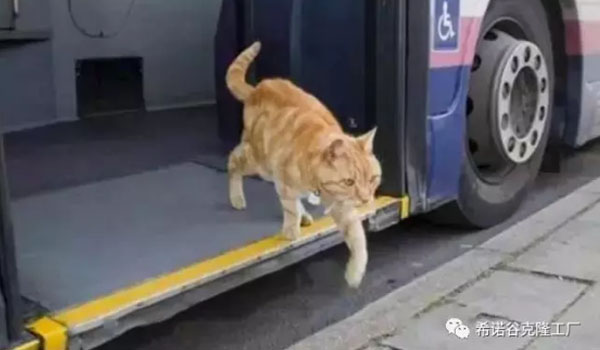
There is an orange cat called Kapas in England. It has been waiting for the same bus for consecutively for five years. Its owner used to take it on this bus. Later, the owner died unexpectedly, and the cat began to take the bus alone. Maybe it felt that one day it could meet the familiar figure here again.

Tani, the tabby cat, followed the ambulance to the hospital. It didn’t know that his owner had passed away and was waiting at the door of the hospital day by day.

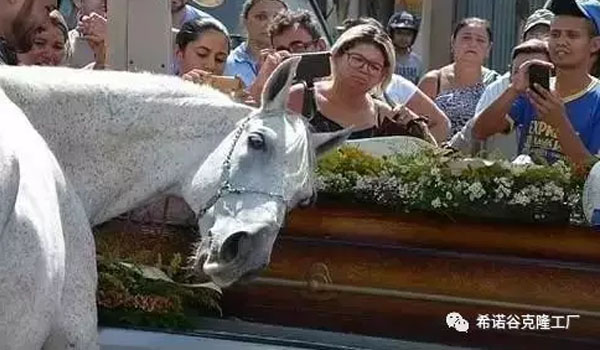
In Brazil, after the owner of a white horse, Sereno, died, his horse wept at the scene of the funeral. animal cloning biotechnology Sinogene, a team of young people, relies on powerful and cutting-edge life science and animal cloning biotechnology to realize commercial animal pet cloning of dogs, cats, and horses by means of cloning and using companion animal cells. Our companion animals return to their owners through their own body cells. When Mr. Huang, the owner of Garlic, the first cloned cat in China, first saw a kitten cloned with Garlic’s body cells, he said, “the first time I saw it, I knew it was my Garlic”. These words moved the Sinogene people in the Sinogene Biotechnology, and they also felt that they were doing very valuable work.