



Dog Cloning
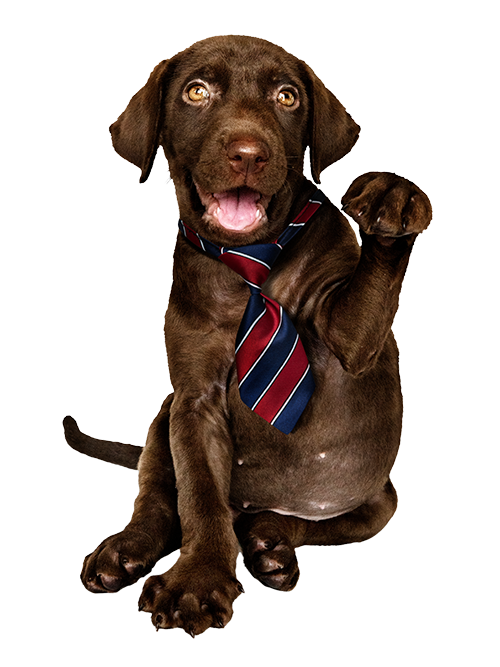
Even after advances in veterinary medicine, your beloved dog will not live forever. Sinogene focuses on the science of dog cloning which presents an opportunity for owners of dogs to extend their relationship with their dog. Dogs are recognized as a loyal friend of its owner, which creates difficulty for many owners to live without their dog. However, if your dog passes away before the collection of tissue sample you may:
What is dog cloning
Dog cloning service offers a remarkable opportunity to extend the companionship we cherish with our pets. At Sinogene, we specialize in creating genetic twins of beloved dogs through advanced cloning technology.
A cloned dog is a genetic replica of the donor dog, born later in time. Importantly, the pet dog cloning process preserves all the unique traits that make your dog irreplaceable, including temperament, intelligence, and physical appearance. Crucially, no changes are made to the original dog’s genetic code during this process.
How does dog cloning work?
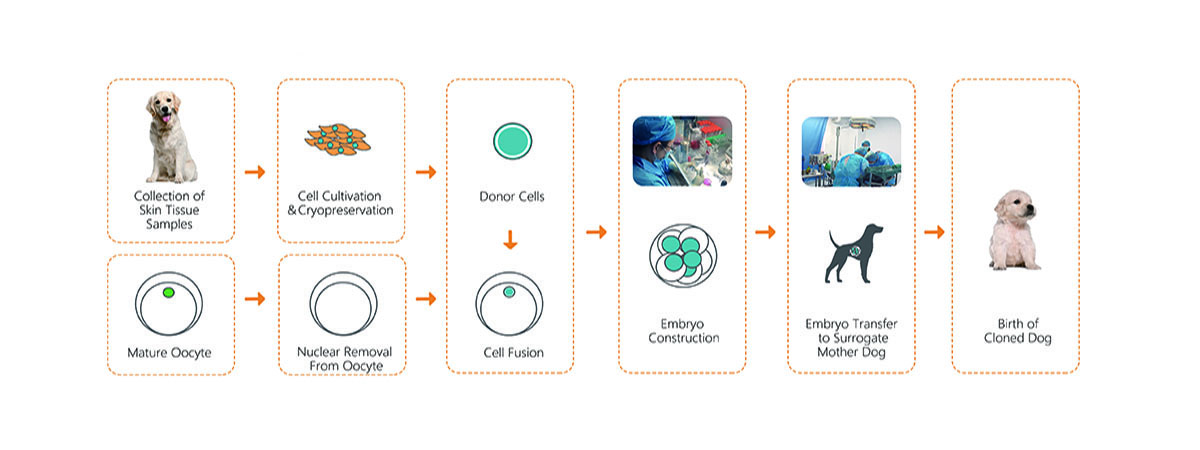
- The journey to clone your pet dog begins with Genetic Preservation. This involves collecting a small tissue sample from your dog, typically a simple and non-invasive procedure conducted by your veterinarian. This sample contains the essential genetic material that will be used to create a clone.
- Next, the genetic material from the donor dog's cell is transferred into an egg whose nucleus has been removed.
- This reconstructed egg, now containing the donor dog's genetic information, develops into an embryo.
- If you have no means to refrigerate the body, take up one ear of your cat and wrap it in sterilized cloth to refrigerate it.
- The embryo is then transferred to a surrogate mother dog, where it gestates and grows naturally.
- Through dog cloning, we enable dog owners to preserve their cherished relationships with their pet dogs for years to come.
Dog Cloning Process Diagram
Sinogene Other Services

Horse Cloning
Cell preservation
Cell preservation conserves the genes of your cat, dog, horse, or rabbit and is your pet’s first necessary step to preserve its genes.